
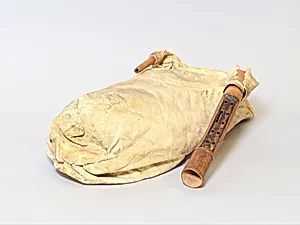
Karamuza
Unknown Artist
19th century
Medium
wood, cane, leather, sheepskin
Classification
Aerophone-Reed Vibrated-bagpipe
Culture
Greek
Department
Musical Instruments
Museum
Metropolitan Museum of Art, New York, NY
Credit
The Crosby Brown Collection of Musical Instruments, 1889
Accession Number
89.4.855
Rights
Public Domain
Art Historical Context
Nestled in the Metropolitan Museum of Art's Crosby Brown Collection of Musical Instruments the *Karamuza* is a captivating 19th-century Greek bagpipe, classified as an aerophone with reed-vibrated mechanisms. This humble yet ingenious instrument embodies the ingenuity of anonymous Greek craftsmen, who fashioned it from everyday natural materials: wood for the pipes, cane for the vibrating reeds, leather for airtight seals, and sheepskin for the bag. These choices not only ensured durability in rugged terrains but also highlighted sustainable, localized artistry rooted in pastoral traditions. In Greek culture, bagpipes like the *Karamuza*—related to regional variants such as the tsampouna—played a vital role in folk music, accompanying dances, weddings, and communal gatherings across the islands and mainland. The player inflates the sheepskin bag with breath, squeezing it to force air through double-reed chanters that produce its distinctive, droning wail. This 19th-century example offers a window into Ottoman-era Greece, where such instruments bridged rural life and oral storytelling, preserving melodies passed down through generations. Today, the *Karamuza* invites visitors to appreciate the intersection of music, craft, and heritage, reminding us how everyday objects can echo the soul of a culture.