
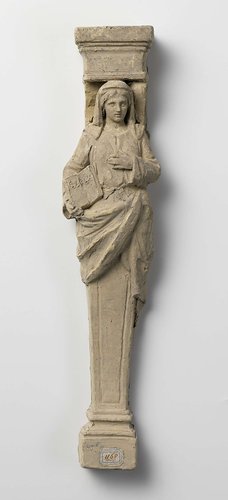
Karyatide: De Theologie
1800 - 1900
Medium
clay
Dimensions
9; 43; 6
Rights
Public Domain
About this artwork
hoogte 43 cm x breedte 9 cm x diepte 6 cm
Art Historical Context
Nestled in the tradition of classical architecture, *Karyatide: De Theologie* by Belgian sculptor Eugène Lacomé (active late 19th century)imagines the ancient Greek caryatid—a graceful female figure serving as a supporting column.ed between 1800 and 1900, this clay sculpture personifies "The Theology," blending symbolic depth with architectural form. Standing at 43 cm tall, 9 cm wide, and 6 cm deep, its slender proportions evoke a sense of poised elegance, ideal for decorative or studiowork in grand interiors. Lacomblé's choice of clay highlights the tactile versatility of terracotta, a medium prized for its warmth and moldability in 19th-century European sculpture. Hand-modeled and likely fired for durability, the piece captures the era's fascination with classical revival, where mythological and allegorical figures adorned public buildings and private collections. Theology as a subject underscores the cultural interplay of faith and humanism during Belgium's artistic flowering amid industrialization. This intimate karyatid invites visitors to ponder how ancient motifs endured, symbolizing knowledge's enduring support in modern life—a testament to Lacomblé's skill in merging history with subtle narrative power.
About the Artist
Eugène Lacomblé · 1828–1905
Eugène Lacomblé (1828–1905) was a versatile Belgian artist who worked primarily as a sculptor but also practiced painting, watercolor, drawing, and etching, embodying the nineteenth-century ideal of the multi-talented artist-craftsman. Born in Brussels and dying in Arnhem, Lacomblé's career spanned the second half of the nineteenth century, a period of significant artistic and social change in Eur...