
Virgin and Child
c. 1500 - c. 1520
Medium
oak with remnants of polychromy and gilding
Dimensions
136
Rights
Public Domain
About this artwork
height 136 cm
Art Historical Context
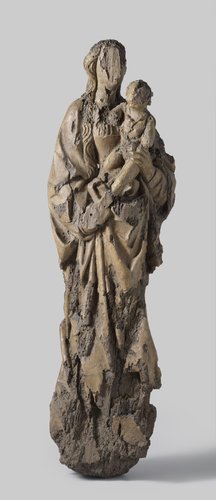
### Virgin and Child (c. 1500–c. 1520) This poignant oak sculpture, standing at 136 cm tall, depicts the timeless Christian motif of the Virgin Mary cradling the Christ Child—a subject central to late medieval and early Renaissance devotion. Created by an anonymous artist during the early 16th century, it likely served as a focal point for prayer in a church, chapel, or affluent home, inviting worshippers to contemplate maternal tenderness and divine incarnation. Carved from oak, a durable wood favored in Northern European workshops for its fine grain and resistance to warping, the figure retains traces of original polychromy (painted colors) and gilding. These techniques brought the wood to vivid life: flesh tones softened the holy figures, vibrant robes added splendor, and gold leaf evoked heavenly radiance. Such embellishments were essential in the period, transforming stark wood into a multisensory encounter that mirrored altarpieces and enhanced spiritual immersion. Though the artist's identity is lost to time, this work exemplifies the transition from Gothic expressiveness to Renaissance naturalism, with its gentle poses and intimate scale fostering personal piety amid Europe's religious upheavals. A surviving testament to anonymous craftsmanship, it whispers of faith's enduring artistry.
About the Artist
anonymous
In the vast tapestry of art history, "Anonymous" stands not as a singular individual but as a collective designation for countless unidentified creators whose works have endured across millennia. These artists, spanning prehistoric cave painters to medieval illuminators and folk craftsmen, produced the foundational layers of human visual culture. Prior to the Renaissance, when individual fame emer...