
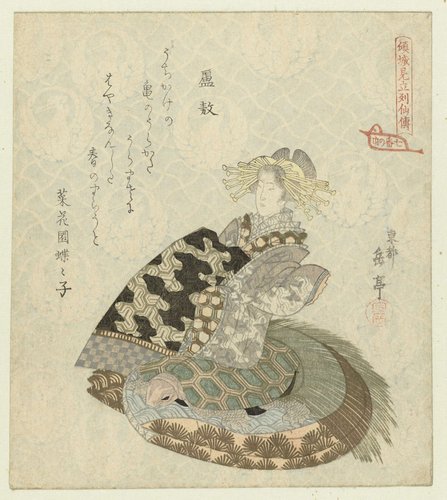
Keisei mitate ressenden - nanaban no uchi
ca. 1821 - ca. 1822
Medium
nishikie, with metallic pigments
Dimensions
207; 183
Rights
Public Domain
About this artwork
verzamelaarsmerk, passe-partout, links onder, gedrukt: JABdH met een haan.
Art Historical Context
**Keisei Mitate Ressenden - Nanaban no Uchi by Yashima Gaki (active c. 1786–1868) is a exquisite example of early 19th-century Japaneseblock printing from around 1821–1822. Gakutei, a master of the Osaka ukiyo-e school, in surimono—luxurious, privately commissioned prints often featuring poetry and vibrant imagery from the "floating world" of pleasure districts. This small-format gem, measuring just 207 × 183 mm, captures the refined elegance of Edo-period artistry. Printed in *nishikie* (brocade picture) technique, it showcases full-color woodblock printing enhanced with metallic pigments like gold or silver, which add a shimmering, opulent glow. These pigments elevated surimono above standard ukiyo-e, making them prized collector's items for New Year's greetings or poetry gatherings. The title suggests a *mitate* (parodic analogy), likely reimagining classical tales through the lens of *keisei* (courtesans), part of a rare "nanaban no uchi" series of seven prints. Bearing a printed collector's mark "JABdH with a rooster" in the lower left, it hints at European appreciation during the print's global dissemination. This work embodies Japan's cultural fusion of wit, beauty, and technical innovation, inviting visitors to ponder the courtesans' poised world. (198 words)
About the Artist
Yashima Gakutei · 1786–1868
Yashima Gakutei (c. 1786–1868), born in Osaka as the illegitimate son of a Tokugawa shogunate samurai named Hirata, adopted the name from his mother's subsequent marriage into the Yashima clan. Little is documented about his early years beyond these familial ties, but he pursued artistic training under the esteemed ukiyo-e masters Totoya Hokkei and Katsushika Hokusai, absorbing their precision in ...