
Kesa
Edo period (1615–1868), Late 18th century
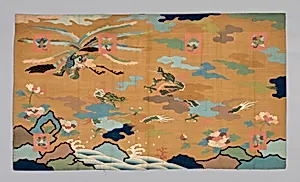
Medium
Silk, gilt-paper-strip-wrapped silk, and peacock-feather-wrapped silk; tapestry weave
Dimensions
117.4 × 206.5 cm (46 1/4 × 81 1/4 in.)
Classification
textile
Department
Textiles
Museum
Art Institute of Chicago
Accession Number
150712
Rights
Public Domain
About this artwork
During the Edo period, artists took liberties with some of the long-established traditions related to kesa. For example, the patchwork process was sometimes ignored in favor of a single uncut fabric with seams implied by inwoven lines or added cording. The preferred technique for these uncut pictorial panels was tapestry weave. In this example, which is particularly Chinese in style and subject, no such lines have been added, suggesting it was used as a hanging for meditation purposes in the mon...
About the Artist
Unknown
The artist designated as "Unknown" in our virtual museum's collection exemplifies a poignant chapter in art history: creators whose identities have faded into obscurity despite the enduring power of their work. With only one known artwork attributed to them in our holdings, this figure represents countless anonymous hands that shaped visual culture across centuries. Museums worldwide, including th...