
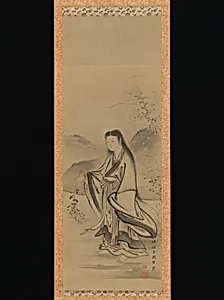
Kiku Jidō (Chrysanthemum Boy)
18th century
Medium
Hanging scroll; ink on silk
Dimensions
Image: 32 × 12 in. (81.3 × 30.5 cm)
Classification
Paintings
Culture & Period
Japan · Edo period (1615–1868)
Department
Asian Art
Museum
Metropolitan Museum of Art, New York, NY
Credit
Mary Griggs Burke Collection, Gift of the Mary and Jackson Burke Foundation, 2015
Accession Number
2015.300.117
Rights
Public Domain
Tags
Art Historical Context
**Kiku Jidō (Chrysanthemum Boy *Tsukioka Sessai, 18th century* Hanging scroll; ink on silk, 32 × 12 in. (81.3 × 30.5 cm) Metropolitan Museum of Art, Art Department In the serene world of Edo-period Japan (1615–1868), Tsukiokaai captures youthful innocence in *Kiku Jidō (Chrysanthemum Boy, a delicate hanging scroll painted in ink on silk. This intimate vertical format, typical of traditional Japanese scroll paintings, was designed to be unrolled for contemplation in a private alcove, evoking the refined aesthetic of literati culture. The artwork features a boy amid chrysanthemums—Japan's imperial flower symbolizing longevity, purity, and autumnal elegance—highlighting themes of ephemeral beauty and harmony with nature. Sessai's masterful use of ink on silk showcases Edo-era techniques, where subtle gradations of wet and dry brushwork create depth and texture without color. Rendered during a time of cultural flourishing under the Tokugawa shogunate, such paintings blended Zen-inspired minimalism with playful subject matter, like the endearing figure of a boy (jidō), possibly alluding to childhood virtues or seasonal festivals. From the esteemed Mary Griggs Burke Collection, this piece invites visitors to appreciate the poetic restraint of Japanese ink painting, where a single flower or figure conveys profound cultural resonance.