
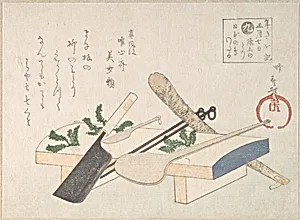
Kitchen Utensils with Greens for the Ceremony on January 7th
19th century
Medium
Woodblock print (surimono); ink and color on paper
Dimensions
5 3/8 x 7 3/8 in. (13.7 x 18.7 cm)
Classification
Prints
Culture & Period
Japan · Edo period (1615–1868)
Department
Asian Art
Museum
Metropolitan Museum of Art, New York, NY
Credit
H. O. Havemeyer Collection, Bequest of Mrs. H. O. Havemeyer, 1929
Accession Number
JP2106
Rights
Public Domain
Tags
Art Historical Context
In the vibrant world of Edo-period Japan (1615–8), Hachifusa Shūri crafted this intimate woodblock print titled *Kitchen Utensils with for the Ceremony on January7th*. Produced in the 19th century it exemplifies *surimono*—luxurious, privately commissioned prints often shared among poetry circles or for celebrations. Measuring just 5 3/8 x 7 3/8 inches, its compact size made it ideal for personal exchange, showcasing meticulous ink and color on paper with fine details in everyday objects like knives and fresh greens. The artwork captures preparations for *Nanakusa no Sekku*, the Festival of Seven Herbs on January 7th, a cherished New Year's ritual. Families prepared herbal rice porridge from seven symbolic greens to purify the body, ward off misfortune, and ensure health after the festive season. Shūri's composition highlights humble kitchen tools alongside these vibrant plants, elevating the mundane to the ceremonial and reflecting ukiyo-e traditions of beauty in transience. Housed in the Metropolitan Museum of Art's H. O. Havemeyer Collection, this print reveals the artistry of Japan's floating world, where woodblock techniques allowed bold colors and precise lines to immortalize cultural customs. A delightful glimpse into Edo domestic life!