
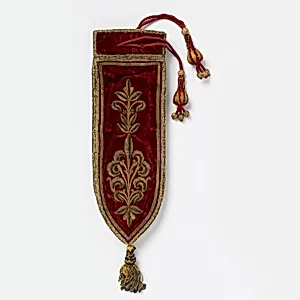
Knife case
17th century
Medium
costume & accessories
Classification
costume & accessories
Department
Smithsonian Collection
Museum
Smithsonian American Art Museum
Credit
Gift of Eleanor and Sarah Hewitt
Accession Number
1931-73-146
Rights
Public Domain
About this artwork
Research in Progress
Art Historical Context
### 17th-Century Knife Case Nestled in the Smithsonian American Art Museum's collection costume and accessories, this enigmatic *Knife Case* hails from the 17 century—a time when everyday objects blended practicality with subtle artistry. Donated as a gift from Eleanor and Sarah Hewitt, exemplifies the functional yet potentially decorative items that accompanied daily life in early America or Europe. Knife cases like this served as protective sheaths or holders for blades, essential for dining,, or self-defense in an era before modern cutlery or tools were widespread. As part of the "costume & accessories" classification, this piece highlights how personal adornments extended beyond clothing to include utilitarian carriers. In the 17th century, such items often featured embroidery, leatherwork, or metal fittings, reflecting craftsmanship that elevated the ordinary. Though research is ongoing, its survival speaks to the cultural value placed on durable, portable goods amid colonial expansion and trade. Today, this knife case invites us to ponder the intimate details of historical lives—how a simple accessory safeguarded tools while possibly signaling status. A testament to anonymous makers' skill, it reminds museum visitors of the artistry in the everyday. (178 words)
About the Artist
Unknown
The artist designated as "Unknown" in our virtual museum's collection exemplifies a poignant chapter in art history: creators whose identities have faded into obscurity despite the enduring power of their work. With only one known artwork attributed to them in our holdings, this figure represents countless anonymous hands that shaped visual culture across centuries. Museums worldwide, including th...