
Knife Handle (Kozuka)
Unknown Artist
late 18th–early 19th century
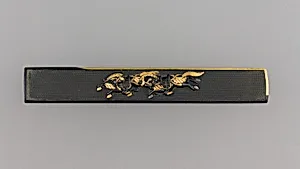
Medium
Copper-gold alloy (shakudō), gold
Dimensions
L. 3 13/16 in. (9.7 cm); W. 9/16 in. (1.4 cm); thickness 1/4 in. (0.6 cm); Wt. 1 oz. (28.3 g)
Classification
Sword Furniture-Kozuka
Culture
Japanese
Department
Arms and Armor
Museum
Metropolitan Museum of Art, New York, NY
Credit
Gift of Herman A. E. and Paul C. Jaehne, 1943
Accession Number
43.120.169
Rights
Public Domain
Tags
Art Historical Context
This exquisite knife handle, known as a *kozuka*, hails from Japan during the late 18 to early 19th, the waning years of the Edo period when samurai culture emphasized refined artistry over battlefield utility. Crafted for the small utility knife tucked into a warrior's sword scabbard, this piece exemplifies the fusion of function and beauty in Japanese arms and armor. Measuring just under 4 inches long, its compact form belies the meticulous craftsmanship involved, now housed in the Metropolitan Museum of Art's Arms and Armor Department as a gift from Herman A. E. and Paul C. Jaehne in 1943. Made from shakudō—a patinated copper-gold alloy prized for its deep, velvety black finish—and accented with gold, the handle likely features intricate depictions of horses, a motif symbolizing power, speed, and nobility in Japanese art. Artisans employed techniques like inlaying (zōgan) or carving to bring these dynamic scenes to life, transforming a utilitarian object into a wearable sculpture. Shakudō's chemical patination process, developed over centuries, allowed for stunning contrasts with gold highlights, showcasing the metalworkers' (togishi) mastery. Beyond its aesthetic appeal, this *kozuka* reflects the cultural zenith of *koshirae* (sword mountings), where even hidden accessories conveyed social status and poetic sensibility. Visitors can appreciate how such items blurred the line between weapon and artwork, embodying the samurai ethos of *bushido* through elegance.