
Knife (Yatagan) with Sheath
Unknown Artist
18th century
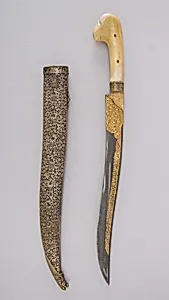
Medium
Steel, gold, ivory, silver, wood
Dimensions
H. with sheath 20 5/8 in. (52.4 cm); H. without sheath 18 3/4 in. (47.6 cm); H. of blade 13 1/2 in. (34.3 cm); W. 2 1/16 in. (5.2 cm); Wt. 11 oz. (311.8 g); Wt. of sheath 8.4 oz. (238.1 g)
Classification
Knives
Culture
Turkish
Department
Arms and Armor
Museum
Metropolitan Museum of Art, New York, NY
Credit
Bequest of George C. Stone, 1935
Accession Number
36.25.685a, b
Rights
Public Domain
Art Historical Context
This exquisite 18th-century Turkish yatagan knife, complete with its sheath, exemplifies the masterful blend of functionality and opulence in Ottoman arms craftsmanship. Forged from steel for a sharp, curved blade measuring 13½ inches long, it features lavish embellishments of gold, silver, ivory and wood. The hilt, likely carved from ivory, and the wooden sheath inlaid with precious metals highlight the weapon's status as a luxury item, far beyond mere utility—perfect for a high-ranking warrior or collector. Yatagans were iconic in Turkish military culture during the Ottoman Empire, favored by cavalry and Janissary troops for their slashing prowess in close combat. This example, standing 20⅝ inches tall with its sheath, weighs just under a pound, balancing lethal efficiency with elegant design. The intricate metalwork techniques, such as gilding and silver damascening, reflect advanced Turkish metalworking traditions, turning a tool of war into a work of art. Now housed in the Metropolitan Museum of Art's Arms and Armor Department through the bequest of George C. Stone in 1935, this yatagan invites visitors to appreciate the cultural prestige of Ottoman weaponry, where beauty and battle intertwined.