
Dagger with Sheath
Unknown Artist
19th century
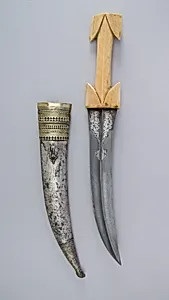
Medium
Steel, silver, ivory (walrus)
Dimensions
H. with sheath 21 7/8 in. (55.6 cm); H. without sheath 20 in. (50.8 cm); W. 2 13/16 in. (7.1 cm); Wt. 1 lb. 2.8 oz. (533 g); Wt. of sheath 11.3 oz. (320.3 g)
Classification
Daggers
Culture
Turkish
Department
Arms and Armor
Museum
Metropolitan Museum of Art, New York, NY
Credit
Bequest of George C. Stone, 1935
Accession Number
36.25.722a, b
Rights
Public Domain
Art Historical Context
This exquisite 19th-century Turkish dagger with sheath exemplifies the masterful fusion of functionality and artistry in Ottoman arms. Crafted from steel for the blade, silver for ornate fittings, and walrus ivory the hilt, it stands an impressive 21⅞ inches tall with its sheath and weighs over 1.5 pounds total. The use of walrus ivory—a rare import from distant northern regions—highlights the expansive trade networks of the Ottoman Empire, blending exotic materials with local metalworking prowess. In Turkish culture, such daggers (known as *khanjar* or similar forms) served dual roles as practical weapons for close combat and symbols of status, often worn by warriors, officials, or elites. The substantial dimensions and balanced weight suggest it was designed for both ceremonial display and real use, reflecting the era's emphasis on durable yet elegantly decorated arms. Intricate silverwork likely adorns the hilt and scabbard, showcasing techniques like gilding or filigree typical of Istanbul's workshops. Acquired through the 1935 bequest of collector George C. Stone, this piece now graces the Metropolitan Museum of Art's Arms and Armor department, inviting visitors to ponder the blend of beauty and lethality in 19th-century Turkey.