
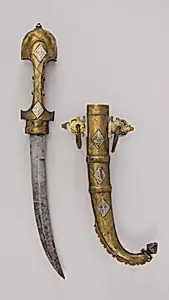
Dagger (Jambiya) with Sheath
Unknown Artist
18th–19th century
Medium
Steel, silver, glass
Dimensions
H. with sheath 16 7/16 in. (41.8 cm); H. without sheath 15 3/4 in. (40 cm); H. of blade 9 1/2 in. (24.1 cm); W. 2 1/4 in. (5.7 cm); Wt. 9.3 oz. (263.7 g); Wt. of sheath 10.3 oz. (292 g)
Classification
Daggers
Culture
Moroccan
Department
Arms and Armor
Museum
Metropolitan Museum of Art, New York, NY
Credit
Bequest of George C. Stone, 1935
Accession Number
36.25.771a, b
Rights
Public Domain
Art Historical Context
This exquisite Moroccan jambiya dagger, dating to the 18th–19th, exemplifies the fusion of functionality and artistry in North African arms. Housed in the Metropolitan Museum of Art's Arms and Armor Department (Bequest of George C. Stone, 1935), it measures 16 7/16 inches with its sheath and features a steel blade of 9 1/2 inches, adorned with silver and glass elements that highlight the silversmith's skill in inlay and embellishment. In Moroccan culture, the jambiya was more than a weapon—it served as a status symbol, often worn tucked into a sash by men during ceremonies, festivals, or daily life in rural regions. Its curved blade and ornate hilt, crafted from durable steel with luxurious silver filigree and colorful glass inlays, reflected the owner's wealth and social standing. These daggers were heirlooms, passed down generations, blending practical defense with symbolic masculinity. Today, this finely balanced piece (total weight around 19.6 ounces with sheath) invites us to appreciate the anonymous artisan's mastery, where everyday steel transformed into cultural treasure through intricate techniques passed down over centuries.