
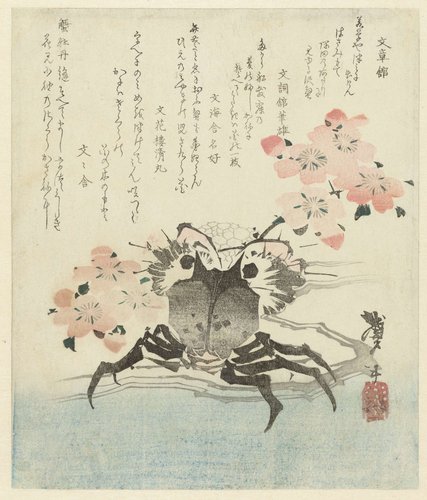
Krab met kersenbloesem
c. 1825 - c. 1830
Medium
nishikie, with metallic pigments adn embossing
Dimensions
222; 187
Rights
Public Domain
About this artwork
verzamelaarsmerk, verso, gestempeld: Lugt 2228
Art Historical Context
**Krab met kersenesem (Crab with Cherry Bloms)** *By Katsushika Taito, c. 1825–1830* This delicate ukiyo-e woodblock print, titled *Krab met kersenesem*, showcases the mastery of Katsushika T II, a prominent pupil of the legendary Hokusai during Japan's Edo period. Measuring just 222 × 187 mm, it *nishikie*—vibrant "brocade pictures" prized for their rich, multi-layered colors achieved through intricate woodblock printing. Taito II's work reflects the ukiyo-e tradition of capturing fleeting beauty, here juxtaposing a crab's sturdy form with ephemeral cherry blossoms, evoking *mono no aware*, the poignant impermanence central to Japanese aesthetics. Luxurious techniques elevate this print: metallic pigments shimmer like dew-kissed petals, while embossing (*karazuri*) adds tactile depth, mimicking the texture of blossoms and shell. Likely a *surimono*—a privately commissioned New Year's print—these features made it a coveted collector's item, as evidenced by the verso stamp (Lugt 2228), linking it to European connoisseurs who admired Japanese art in the 19th century. In the bustling cultural scene of 1820s Edo (modern Tokyo), such prints bridged everyday life and poetry, blending nature's harmony with technical innovation. A gem for visitors, it invites reflection on transience amid artistry's enduring allure.