
Lamp
Unknown Artist
13th–14th century
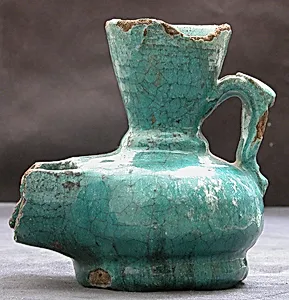
Medium
Earthenware; molded and glazed
Dimensions
H. 4 1/4 in. (10.8 cm)
Classification
Ceramics
Department
Islamic Art
Museum
Metropolitan Museum of Art, New York, NY
Credit
Gift of Herbert E. Winlock, 1941
Accession Number
41.23.2
Rights
Public Domain
Art Historical Context
This delicate earthenware lamp, crafted by an unknown artist in the th–14th century exemplifies the refined ceramics of the Islamic world during the medieval period. Standing just 4¼ inches (10.8 cm) tall, it was likely used for oil lighting in homes, mosques, or palaces, where such vessels provided both practical illumination and aesthetic charm. Housed in the Metropolitan Museum of Art's Art Department, it entered the collection as a gift from Herbert E. Winlock in 1941. The lamp's molded form and vibrant glazing highlight advanced techniques in Islamic pottery production. Artisans pressed clay into molds for precise shapes—often featuring geometric or floral motifs symbolic of paradise gardens—then applied a glossy glaze fired at high temperatures. This not only sealed the porous earthenware against liquids but also created a luminous surface that mimicked precious metals, elevating everyday objects to art. Culturally, these lamps reflect the Islamic emphasis on beauty in utility, blending functionality with spiritual resonance. In an era of expanding trade and patronage under dynasties like the Mamluks or Seljuks, such ceramics spread innovative designs across the Middle East and beyond, offering visitors a tangible glimpse into daily life and artistic ingenuity over 700 years ago.