
Landscape
16th century
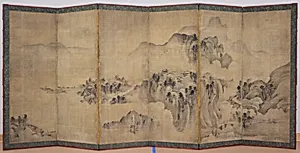
Medium
Six-panel folding screen; ink on paper
Dimensions
66 in. × 11 ft. 8 1/4 in. (167.6 × 356.2 cm)
Classification
Paintings
Culture & Period
Japan · Muromachi period (1392–1573)
Department
Asian Art
Museum
Metropolitan Museum of Art, New York, NY
Credit
Bequest of Hope Skillman Schary, 1981
Accession Number
1982.244.16
Rights
Public Domain
Tags
Art Historical Context
Step into the serene world of Muromachi-period Japan with *Landscape*, a masterful six-panel folding screen by Zen monk-painter Sesson Shū, created in the 16th. Crafted in ink on paper, this expansive work (measuring 66 inches high by over 11 feet wide) unfolds a dramatic vista of towering mountains, misty valleys, and winding rivers—hallmarks of traditional Japanese suiboku-ga, or ink landscape painting. Folding screens like this byōbu were not mere decorations; they served as architectural elements in elite samurai residences and temples, dividing spaces while showcasing the owner's refined taste and spiritual depth. Sesson's style draws from Chinese Song dynasty influences, particularly the bold, expressive brushwork of artists like Xia Gui, yet infuses a distinctly Japanese lyricism and Zen-inspired minimalism. During the Muromachi era (1392–1573), under the patronage of the Ashikaga shoguns, such landscapes symbolized the fleeting beauty of nature and the impermanence of life, resonating with Zen Buddhist ideals. This screen's dynamic composition, with its layered depths and varied ink washes, invites contemplation, transporting viewers to mist-shrouded peaks that evoke timeless harmony. Bequeathed to the Metropolitan Museum of Art in 1981, *Landscape* exemplifies the artistic zenith of Muromachi ink painting, bridging East Asian traditions in a format that was both intimate and monumental.
About the Artist
Sesson Shūkei · 1500–1600
ca. 1504–ca. 1589