
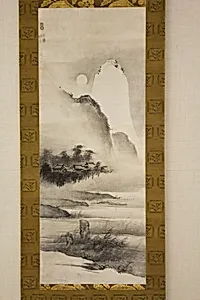
Landscape in the Moonlight
probably 18th or 19th century
Medium
Hanging scroll; ink on paper
Dimensions
Image: 36 5/8 × 14 1/8 in. (93 × 35.9 cm) Overall with mounting: 73 1/16 × 19 5/16 in. (185.6 × 49.1 cm) Overall with knobs: 73 1/16 × 21 1/4 in. (185.6 × 53.9 cm)
Classification
Paintings
Culture & Period
Japan · Edo period (1615–1868)
Department
Asian Art
Museum
Metropolitan Museum of Art, New York, NY
Credit
The Howard Mansfield Collection, Purchase, Rogers Fund, 1936
Accession Number
36.100.96
Rights
Public Domain
Tags
Art Historical Context
**Landscape in the Moonlight** Yōgetsu is a captivating hanging scroll from Japan's Edo period (16151868), likely created in the 18th or 19th century.ed in delicate ink on paper, this composition (image: 36⅝ × 14⅛ in.) evokes a serene nocturnal scene, where the moon's glow illuminates misty landscapes—a timeless motif in Japanese art. Hanging scrolls like this were prized for their portability and ceremonial display in homes or temples, unrolled for special occasions to inspire contemplation. Yōgetsu's work the refined techniques of Edo-era ink painting, using varying ink densities to suggest depth, mist, and ethereal light without color. This minimalist approach, rooted in Zen-influenced traditions, prioritizes harmony between artist, nature, and viewer. Landscapes under moonlight often symbolized *mono no aware*—the poignant beauty of transience—resonating with Japan's cultural reverence for seasonal and lunar cycles. Acquired through The Howard Mansfield Collection (Rogers Fund, 1936) and housed in the Metropolitan Museum of Art's Asian Art Department, this piece invites visitors to pause and ponder the quiet poetry of the night sky.