
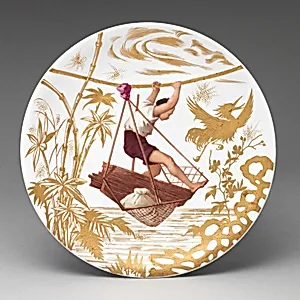
Le Bac Aerien
ca. 1880
Medium
Bone china
Dimensions
Diameter: 9 in. (22.9 cm)
Classification
Ceramics-Porcelain
Culture
British, Worcester
Department
European Sculpture and Decorative Arts
Museum
Metropolitan Museum of Art, New York, NY
Credit
Purchase, Friends of European Sculpture and Decorative Arts Gifts, 1996
Accession Number
1996.162
Rights
Public Domain
Tags
Art Historical Context
**Le Bac Aérien**, crafted by the renowned Worcester porcelain factory around 1880, exemplifies the pinnacle of British bone china production during the Victorian era. This 9-inch diameter plate, housed in the Metropolitan Museum of's European Sculpture and Decor Arts collection, showcases the factory's mastery in creating delicate yet durable ceramics. Worcester, founded in 1751 as one of England's earliest porcelain makers, became synonymous with fine bone china—a translucent, ivory-white material strengthened by bone ash, which allowed for intricate designs and everyday elegance. The title, translating to "The Aerial Ferry," hints at a whimsical scene likely featuring birds and men, as suggested by its tags. Such motifs reflect the Victorian fascination with fantastical narratives and nature, often hand-painted or transfer-printed onto the gleaming surface. Bone china's significance lies in its technical innovation, offering superior whiteness and thinness compared to earlier porcelains, making it a staple for both utilitarian and ornamental pieces exported worldwide. This purchase from 1996 underscores its enduring appeal in decorative arts. Visitors will appreciate how *Le Bac Aérien* captures Worcester's blend of artistry and industry, bridging everyday objects with imaginative storytelling.
About the Artist
Worcester factory · 1751–2008
The Worcester porcelain factory, established in 1751 in Worcester, England, by physician Dr. John Wall and apothecary William Davis along with 14 partners, marked the birth of one of Britain's most enduring ceramic enterprises. Investing £4,500 at Warmstry House on the River Severn, the founders drew on contacts with the Bristol porcelain manufactory to develop a novel soft-paste porcelain using s...