
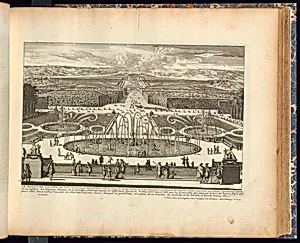
LE BASIN DE LATONE
ca. 1670–1687
Classification
Department
Smithsonian Collection
Museum
Smithsonian American Art Museum
Credit
Purchased for the Museum by the Advisory Council
Accession Number
1921-6-533-106
Rights
Public Domain
About this artwork
Research in Progress
Art Historical Context
**Le Bassin de Latone is a captivating print by French engraver Adam Perelle (16381695), created around 1670–1687. Perelle, renowned for his intricate topographic views, likely captured the grandeur of the Latona Basin in the Gardens of Versailles—a monumental fountain depicting the mythological tale of Latona, mother of Apollo and Diana, transforming peasants into frogs. This work exemplifies the Baroque era's emphasis on spectacle and symmetry, reflecting Louis XIV's vision of absolute monarchy through landscape architecture designed by André Le Nôtre. Produced during Versailles' transformation into Europe's most lavish royal residence, the print served as a visual record of the Sun King's ambitious projects. Engravings like this were essential in the 17th century, allowing the elite across Europe to "visit" the gardens virtually and admire French ingenuity. Perelle's family workshop specialized in such detailed reproductions, blending technical precision with artistic flair to immortalize water features, parterres, and sculptures. Acquired by the Smithsonian American Art Museum through its Advisory Council, this piece highlights the era's cultural diplomacy—propaganda in ink that elevated Versailles as a symbol of power. Though research continues, it invites us to ponder how prints democratized access to royal splendor.