
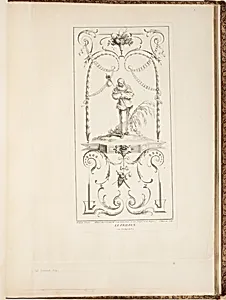
LE FRILEUX
1723-1735
Classification
Bound print
Department
Smithsonian Collection
Museum
Smithsonian American Art Museum
Credit
Purchased for the Museum by the Advisory Council
Accession Number
1921-6-224-109
Rights
Public Domain
About this artwork
Research in Progress
Art Historical Context
**LE FRILEUX** by Antoine Watteau (, 1684–1721) captures the artist's signature elegance in a posthumously produced bound print, dated between 1723 and1735. Watteau, a pioneer of the Rococo style, was renowned for his *fêtes galantes*—dreamy scenes of aristocratic leisure amid lush landscapes. Though he died young from tuberculosis in 1721, his intricate drawings inspired a wave of engravings, including this one from the *Recueil Jullienne*, a collection compiled by his patron Jean de Jullienne to preserve and popularize his oeuvre. The title, meaning "The Shiverer," likely evokes a playful, theatrical figure caught in a moment of delicate vulnerability, embodying Watteau's fascination with *commedia dell'arte* characters and poised gestures. As a bound print—possibly an etching or engraving after one of Watteau's chalk studies—its medium highlights the era's innovative printmaking techniques, which allowed widespread dissemination of fragile originals. Acquired by the Smithsonian American Art Museum through the Advisory Council, this work reflects the enduring appeal of Watteau's lighthearted yet poignant sensibility. Today, *LE FRILEUX* offers a window into 18th-century French taste, blending fantasy with human emotion. Ongoing research promises deeper insights, but its charm lies in Watteau's masterful linework, inviting viewers to ponder the shiver of life's fleeting joys. (198 words)