
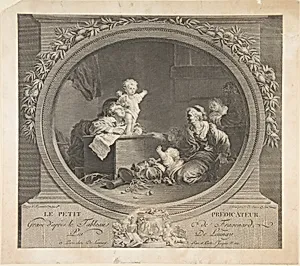
Le Petit Predicateur
Medium
Ething and engraving; second state of two (Portalis)
Dimensions
sheet: 11 15/16 x 13 3/8 in. (30.4 x 34 cm) image: 10 9/16 x 11 7/8 in. (26.8 x 30.2 cm)
Classification
Prints
Department
Drawings and Prints
Museum
Metropolitan Museum of Art, New York, NY
Credit
The Elisha Whittelsey Collection, The Elisha Whittelsey Fund, 1958
Accession Number
58.524.6
Rights
Public Domain
Tags
Art Historical Context
"Le Petit Predicateur" (The Little Preacher) is an enchanting 18th-century print that captures the playful spirit of French Rococo art. Jean-Honoré Fragonard, a leading figure of the Rococo movement known for his lighthearted and intimate genre scenes, designed the composition, which Nicolas de Launay skillfully translated into etching and engraving. This second state of the print, measuring roughly 11 by 13 inches, highlights the delicate linework and tonal subtlety that made such reproductive prints highly prized for sharing paintings with a broader audience. The scene centers on an infant in a charming domestic moment with women, evoking the Rococo fascination with childhood innocence and everyday tenderness. Fragonard’s original designs often celebrated fleeting joys and human connection, and this work exemplifies how prints extended those themes beyond elite collectors into wider cultural circulation. Housed in the Metropolitan Museum of Art’s Department of Drawings and Prints as part of the Elisha Whittelsey Collection, the piece offers modern viewers a window into 18th-century French society’s delight in wit and sentiment. Its technique and subject matter together illustrate the era’s elegant blend of artistry and accessibility.
About the Artist
Jean Honoré Fragonard|Nicolas de Launay|Nicolas de Launay · 1732–1806
Jean-Honoré Fragonard (1732-1806) was a French painter and printmaker whose late Rococo manner was distinguished by remarkable facility, exuberance, and hedonism. Born in Grasse, he moved to Paris where he trained under Jean-Baptiste Chardin and François Boucher, winning the prestigious Prix de Rome in 1752. After studying in Italy alongside Hubert Robert, Fragonard returned to Paris in 1761 to fi...