
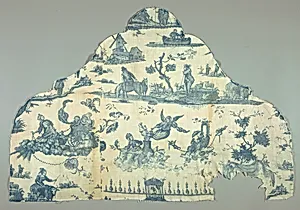
Le temple de l'amour
Classification
printed, dyed & painted textiles
Department
Smithsonian Collection
Museum
Smithsonian American Art Museum
Credit
Bequest of Elinor Merrell
Accession Number
1995-50-104
Rights
Public Domain
About this artwork
Research in Progress
Art Historical Context
"Le Temple de l'Amour," created around 1785 by the French firm Gorgerat Fr et Cie. in Nantes exemplifies the vibrant world of late 18th-century printed textiles. Active from 1783 to 1815, this Nantes-based company was part of France's booming cotton printing industry, which revolutionized home decoration during the Enlightenment era. The title, translating to "The Temple of," evokes neoclassical romanticism, blending mythological themes with elegant pastoral scenes—a popular motif in furnishings just before the French Revolution. Crafted as a printed, dyed, and painted textile, this piece showcases innovative techniques that allowed for intricate, colorful designs on cotton or linen. Printers in Nantes, a key Atlantic port, used wooden blocks or early copperplates to apply dyes, often hand-painted for highlights, creating durable yet luxurious fabrics for upholstery, curtains, and wall hangings. These methods made opulent interiors accessible beyond aristocracy, influencing global tastes through exports to Europe and America. Now in the Smithsonian American Art Museum through the bequest of Elinor Merrell, this work highlights the artistry of industrial textiles. Though research continues, it stands as a window into pre-Revolutionary France's blend of commerce, culture, and classical fantasy, inviting visitors to imagine it adorning a grand salon alive with whispers of love.