
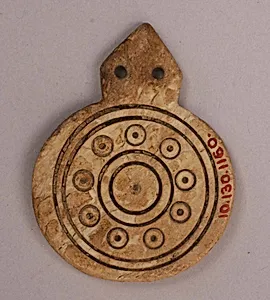
Lid
Unknown Artist
9th–14th century
Medium
Bone; incised and inlaid with paint
Dimensions
H. 1 5/8 in. (4.2 cm) Diam. 1 5/16 in. (3.4 cm)
Classification
Ivories and Bone
Department
Islamic Art
Museum
Metropolitan Museum of Art, New York, NY
Credit
Gift of Helen Miller Gould, 1910
Accession Number
10.130.1160
Rights
Public Domain
Art Historical Context
This delicate bone lid, crafted by an unknown artist between the9th and 14th centuries, exemplifies the refined artistry of the Islamic world. Measuring just 1 5/8 inches high and 1 5/16 inches in diameter it likely served as a cover for a small container, such as a cosmetic box or vessel, common in medieval Islamic households. Housed in the Metropolitan Museum Art's Department of Islamic Art, it entered the collection as a gift Helen Miller Gould in 0, preserving a fragment of everyday luxury from a vibrant era spanning the Abbasid Caliphate to the Mongol invasions. The lid's medium—bone, incised with fine lines and inlaid with paint—highlights masterful techniques that transformed humble materials into objects of beauty. Incising involved carving intricate patterns into the bone surface, creating textured designs that were then filled with colored pigments for vivid contrast and durability. This method, widespread in Islamic ivories and bonework, allowed artisans to achieve jewel-like effects without precious materials, reflecting resourcefulness and skill in regions like Egypt, Iraq, or Syria. Though its exact motifs remain understated in scale, this lid offers a window into Islamic decorative arts, where portability and precision underscored cultural values of refinement and portability. Visitors can appreciate how such tiny treasures bridged utility and aesthetics in daily life.