
Lion
Unknown Artist
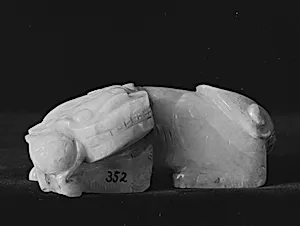
Medium
Jadeite
Dimensions
H. 3 13/16 in. (9.7 cm); W. 1 1/2 in. (3.8 cm); L. 1 15/16 in. (5 cm)
Classification
Jade
Culture & Period
China · before Ming dynasty (1368–1644)
Department
Asian Art
Museum
Metropolitan Museum of Art, New York, NY
Credit
Gift of Heber R. Bishop, 1902
Accession Number
02.18.352
Rights
Public Domain
Tags
Art Historical Context
This exquisite jadeite lion, carved from a rare and highly prized green stone, stands as a testament to the masterful jade-working traditions of ancient China, predating the Ming dynasty1368–1644). Measuring just under 4 inches tall, its compact form captures the fierce yet majestic essence of the lion—a creature not native to China but revered as a symbol of power, protection, and imperial. Likely intended as a decorative ornament or ritual object, it exemplifies the intricate craftsmanship of early Chinese artisans, who transformed tough jadeite into fluid, lifelike sculptures using abrasive techniques and exceptional patience. Jade held profound cultural significance in ancient China, embodying purity, immortality, and moral virtue, often reserved for the elite. Lions, or "foo dogs," frequently appeared in pairs as guardians at palaces, tombs, and temples, warding off evil spirits. This solitary piece, gifted to the Metropolitan Museum of Art in 1902 by Heber R. Bishop, invites us to ponder its original context—perhaps adorning a scholar's desk or a noble's burial goods. Its survival highlights jade's enduring durability and the artistry of a lost era, offering visitors a tangible link to China's Neolithic-to-Song dynasty reverence for this "stone of heaven."