
Figure of a Lion
Unknown Artist
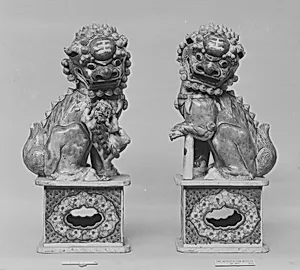
Medium
Porcelain with famille verte
Dimensions
H. 14 in. (35.6 cm)
Classification
Ceramics
Culture & Period
China · Qing dynasty (1644–1911), Kangxi period (1662–1722)
Department
Asian Art
Museum
Metropolitan Museum of Art, New York, NY
Credit
The Theodore M. Davis Collection, Bequest of Theodore M. Davis, 1915
Accession Number
30.95.302
Rights
Public Domain
Tags
Art Historical Context
This striking porcelain figure of a lion, standing 14 inches (35.6 cm) tall, originates from China's Qing dynasty during the Kangxi period (1662–1722), a golden age of ceramic innovation. Produced at the imperial kilns of Jingdezhen, it showcases the exquisite *famille verte* style—named for its predominant green enamels applied over a brilliant white glaze. These overglaze colors, fired at lower temperatures, allowed for intricate, vibrant designs that captured the lion's fierce yet majestic form, blending functionality with artistry. In Chinese culture, lions symbolized imperial power, protection, and warding off evil spirits, often appearing as guardian figures (*foo lions*) at palaces, temples, and elite homes. The Kangxi emperor's patronage fueled technical advancements in porcelain, making *famille verte* wares highly prized exports and domestic treasures. This piece, part of The Theodore M. Davis Collection bequeathed to the Metropolitan Museum of Art in 1915, invites us to marvel at the era's masterful fusion of symbolism and craftsmanship. (178 words)