
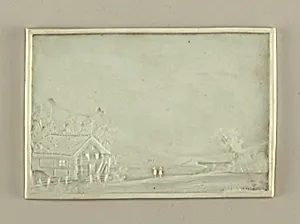
Lithophane of a Winter Landscape
1825–1900
Classification
ceramics
Department
Smithsonian Collection
Museum
Smithsonian American Art Museum
Credit
Smithsonian American Art Museum
Accession Number
1936-58-7
Rights
Public Domain
About this artwork
Research in Progress
Art Historical Context
Step into the enchanting world of 19th-century optical curiosities with *Lithophane of a Landscape*, a delicate ceramic artwork from the Smithsonian American Art's collection, dating between 1825 and 1900. Lithophanes, invented in the 1820s in Europe, are thin sheets of translucent porcelain molded in relief, transforming ordinary light into vivid images. Held against a backlight—like a candle or lamp—this piece reveals a serene winter scene, with snow-draped trees and icy expanses emerging from shadowy depths, much like a proto-photograph etched in clay. Crafted during a time when industrial advances made such intricate ceramics accessible, this anonymous work exemplifies the era's fascination with illusion and domestic novelty. Often used in teacups, nightlights, or viewing boxes, lithophanes blended artistry with science, showcasing the precision of molds that captured subtle gradations of light and shadow. Though the exact medium details and creator remain under research, its presence in the Smithsonian highlights American enthusiasm for European imports and innovations, evoking the quiet magic of long winter evenings. (178 words)
About the Artist
Unknown
The artist designated as "Unknown" in our virtual museum's collection exemplifies a poignant chapter in art history: creators whose identities have faded into obscurity despite the enduring power of their work. With only one known artwork attributed to them in our holdings, this figure represents countless anonymous hands that shaped visual culture across centuries. Museums worldwide, including th...