
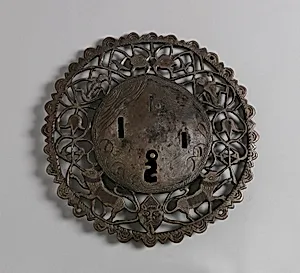
Lock and key
late 16th–mid- 17th century
Medium
metalwork
Classification
metalwork
Department
Smithsonian Collection
Museum
Smithsonian American Art Museum
Credit
Gift of Anonymous Donor
Accession Number
1952-161-135-a/c
Rights
Public Domain
About this artwork
Research in Progress
Art Historical Context
Behold the enigmatic *Lock and Key*, a finely crafted metalwork piece from the late 16th to-17th century, housed in the Smithsonian American Museum's collection. Donated anonymously, this artifact exemplifies the exquisite metalworking traditions of the early modern era, when locksmiths blended functionality with artistry. Though the artist's identity remains unknown—research is ongoing—its presence in an American art context hints at possible colonial influences or European imports that shaped early New World craftsmanship. Crafted during the Renaissance-to-Baroque transition, such locks and keys were more than mere security devices; they symbolized ingenuity, status, and protection in an age of exploration and upheaval. Metalworkers employed techniques like forging, filing, and intricate engraving to create durable yet decorative objects, often featuring hidden mechanisms or symbolic motifs. This piece invites us to ponder the skilled hands behind it, turning everyday utility into enduring legacy. As part of the Smithsonian's metalwork classification, *Lock and Key* sparks curiosity about daily life centuries ago—guarding treasures amid historical flux. A testament to anonymous mastery, it reminds visitors that art thrives in the shadows of history. (198 words)
About the Artist
Unknown
The artist designated as "Unknown" in our virtual museum's collection exemplifies a poignant chapter in art history: creators whose identities have faded into obscurity despite the enduring power of their work. With only one known artwork attributed to them in our holdings, this figure represents countless anonymous hands that shaped visual culture across centuries. Museums worldwide, including th...