
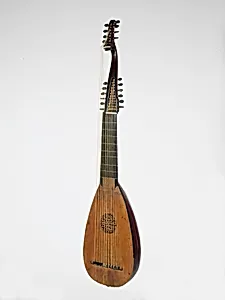
Lute
1669
Medium
Spruce, snakewood, ebony
Dimensions
46 3/4 × 11 × 5 1/2 in. (118.7 × 27.9 × 14 cm)
Classification
Chordophone-Lute-plucked-fretted
Culture
Italian
Department
Musical Instruments
Museum
Metropolitan Museum of Art, New York, NY
Credit
Purchase, Amati Gifts, 2008
Accession Number
2008.3a, b
Rights
Public Domain
Art Historical Context
Step into the enchanting world of Baroque music with Pietro Railich's *Lute* from 1669, a masterpiece of Italian lutherie now housed in the Metropolitan Museum of Art's Musical Instruments collection. Crafted from resonant spruce for the soundboard, exotic snakewood for its striking grain, and durable ebony for accents, this chordophone measures an impressive 46 3/4 × 11 × 5 1/2 inches. As a plucked, fretted lute, it exemplifies the precision and artistry of 17th-century Venetian or Bolognese workshops, where makers like Railich elevated instrument design to sculptural beauty. In the opulent courts of Renaissance and Baroque Europe, the lute was the nobleman's instrument, accompanying intimate chamber music by composers like Monteverdi and Bach. Railich's use of premium woods not only ensured superior tone—spruce vibrating freely for warmth and projection—but also showcased the era's fascination with global trade, importing snakewood from distant shores. Its intricate construction, with a waisted body and tied gut frets, reflects techniques honed over centuries, blending functionality with ornate decoration. Acquired through the Amati Gifts in 2008, this lute invites visitors to ponder the lute's decline with the rise of the keyboard, yet its survival speaks to enduring Italian craftsmanship. Pluck its strings in imagination, and hear the echoes of a vanished musical golden age.