
Madonna dress
Unknown Artist
early 1820s (?)
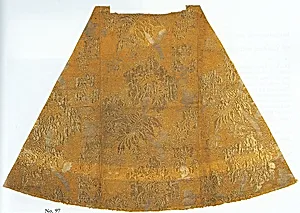
Medium
cotton; metal; silk;
Dimensions
41 1/2 x 60 1/2 in. (105.4 x 153.7 cm)
Classification
Textiles-Ecclesiastical
Culture
Russian
Department
Robert Lehman Collection
Museum
Metropolitan Museum of Art, New York, NY
Credit
Robert Lehman Collection, 1975
Accession Number
1975.1.1931
Rights
Public Domain
Art Historical Context
Nestled in the Robert Lehman at The Metropolitan Museum of Art, *Madonna Dress* is a captivating example of early 19th-century Russian ecclesiastical textiles, dating to the early 1820s. Measuring 41½ x 60½ inches, this imposing garment—crafted from cotton, metal, and silk—likely served a sacred purpose in Orthodox Christian liturgy, evoking the revered figure of the Madonna. Its classification as an ecclesiastical textile underscores its role in religious ceremonies, where such opulent pieces adorned clergy or were used in processions honoring the Virgin Mary. Russian textile traditions during this era flourished under the influence of the Orthodox Church, blending practicality with profound spirituality. The combination of humble cotton for structure, luxurious silk for sheen, and metallic threads for shimmering embroidery reflects the era's masterful techniques, creating garments that symbolized divine glory. Though the artist remains unknown, the dress exemplifies the cultural importance of vestments in imperial Russia, where they bridged the earthly and the heavenly during Alexander I's reign. This rare survivor offers a glimpse into Russia's devout artistic heritage, reminding visitors of textiles' power to inspire awe in sacred spaces. Part of the 1975 Lehman gift, it invites contemplation of faith's tangible beauty.