
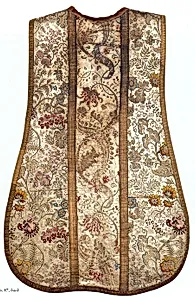
Chasuble
Unknown Artist
early 18th century
Medium
Silk; metal; cotton; hemp
Dimensions
From center back neck: 41 5/8 x 29 in. (106.2 x 73.7 cm)
Classification
Textiles-Ecclesiastical
Culture
Italian
Department
Robert Lehman Collection
Museum
Metropolitan Museum of Art, New York, NY
Credit
Robert Lehman Collection, 1975
Accession Number
1975.1.1801
Rights
Public Domain
Tags
Art Historical Context
This exquisite chasuble, a sleeveless outer vestment worn by Catholic priests during Mass, hails from early 18th-century Italy Crafted during the Baroque era, when opulent religious art flourished, it exemplifies the grandeur of ecclesiastical textiles designed to inspire awe in worshippers. Measuring 41 5/8 x 29 inches from the center back, its generous drape allowed for fluid movement during liturgy, blending functionality with splendor. Woven and likely embroidered with silk, metal threads, cotton, and hemp, the chasuble showcases masterful textile techniques of the period. The shimmering silk and metallic accents would have caught candlelight in dimly lit churches, while floral motifs—evident in its design—symbolized paradise and divine beauty, a common motif in Italian sacred art. These materials, luxurious for their time, highlight the Church's patronage of skilled artisans. Part of the Robert Lehman Collection at The Metropolitan Museum of Art since 1975, this anonymous masterpiece offers a window into Italy's rich tradition of liturgical vestments, where every stitch served both spiritual and aesthetic purposes. Visitors, imagine its vibrant hues adorning a priest amid incense and chant— a tangible link to centuries of faith and craftsmanship.