
Marionette
1935/1942
Medium
watercolor, graphite, and gouache on paperboard
Dimensions
overall: 51 x 40.7 cm (20 1/16 x 16 in.) Original IAD Object: 36" high
Classification
Index of American Design
Department
CG-W
Museum
National Gallery of Art, Washington, D.C.
Credit
Index of American Design
Accession Number
1943.8.15731
Rights
Public Domain
Art Historical Context
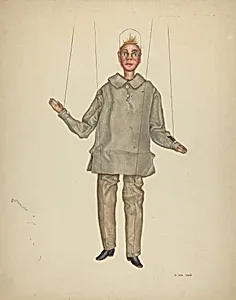
**Marionette** by Van Voris captures the whimsical charm of an American puppet in a meticulously rendered study from the Index of American. Created between 1935 and 1942, this watercolor, graphite, and gou work on paperboard measures 51 x 40.7 cm (20 1/16 x 16 in.), depicting a marionette standing 36 inches tall in real life. Van Voris precise draftsmanship highlights the puppet's carved wooden form, articulated joints, and colorful details, evoking the playful artistry of folk craftsmanship. As part of the Index of American Design—a Federal Art Project under the Works Progress Administration (WPA) during the Great Depression—this piece documents everyday American design traditions. Launched in 1935, the Index employed artists to create vibrant, accurate renderings of objects like furniture, textiles, and toys, preserving cultural heritage amid economic hardship. Van Voris's contribution celebrates marionettes, symbols of 19th- and early 20th-century entertainment from vaudeville stages to home puppet shows. The mixed-media technique—graphite for fine lines, watercolor and gouache for luminous color—lends a lifelike quality, bridging fine art and documentation. Housed in the National Gallery of Art, **Marionette** invites visitors to appreciate how ordinary objects embody America's inventive spirit.
About the Artist
Vera Van Voris
Vera Van Voris is an artist whose works have been preserved in museum collections in sufficient number to indicate a serious and sustained artistic practice, even though her biographical details — birth and death dates, nationality, and the particulars of her training — remain undocumented in the standard art-historical literature. Her distinctive name suggests possible Dutch or Central European h...