
Mars and Venus
ca. 1680
Medium
oil on canvas
Dimensions
94; 125
Rights
Public Domain
About this artwork
height 125 cm x width 94 cm
Art Historical Context
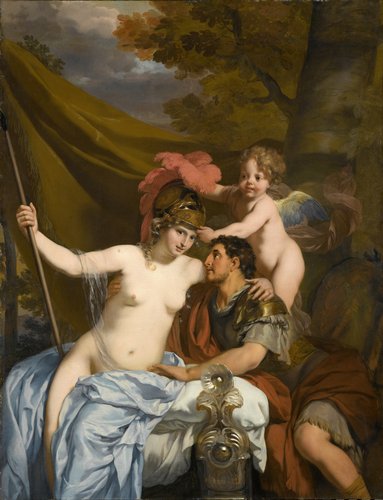
Gerard de Lairesse *Mars and Venus* (ca. 1680) is a captivating oil on canvas painting measuring 125 cm high by 94 cm wide, housed in the Rijksmuseum This life-sized work captures the timeless myth of the Roman gods of war and love—Mars, the armored warrior, and Venus, embodiment of beauty—often depicted in art as lovers entwined, symbolizing harmony amid conflict. Lairesse, a prominent Dutch artist of the late Baroque period, drew from classical antiquity and French academic influences, blending elegant idealism with dramatic tension. Trained in the vibrant Amsterdam art scene during the Dutch Golden Age's waning years, he favored smooth, polished surfaces and balanced compositions over the raw emotion of contemporaries like Rembrandt. Oil on canvas allowed him to achieve luminous flesh tones and rich drapery, hallmarks of his history paintings that elevated mythological themes to moral allegories. This piece reflects the era's fascination with Greco-Roman stories, popular among Europe's elite for decorating grand homes. Its poised figures invite viewers to ponder love's triumph over strife, showcasing Lairesse's skill in narrative grandeur. A gem of 17th-century classicism, it reminds us how art bridged pagan myths and contemporary ideals.
About the Artist
Gerard de Lairesse · 1641–1711
Gerard de Lairesse (1641–1711) was a leading figure of the Dutch Golden Age, renowned as both a painter and art theorist whose classical ideals bridged the dramatic realism of Rembrandt with the refined elegance of French academism. Born on September 11, 1641, in Liège, he was the second son of the painter Renier de Lairesse (1597–1667). De Lairesse received his initial training under his father b...