
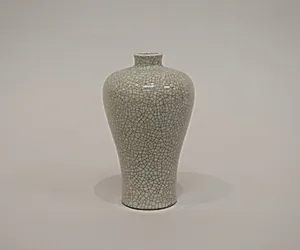
Meiping vase
Unknown Artist
late 17th–early 18th century
Medium
Porcelain with Ge-type crackled glaze (Jingdezhen ware)
Dimensions
H. 7 1/8 in. (18.1 cm); Diam. 4 3/8 in. (11.1 cm)
Classification
Ceramics
Culture & Period
China · Qing dynasty (1644–1911), Kangxi period (1662–1722)
Department
Asian Art
Museum
Metropolitan Museum of Art, New York, NY
Credit
Bequest of Benjamin Altman, 1913
Accession Number
14.40.5
Rights
Public Domain
Art Historical Context
This elegant Meiping vase, a classic Chinese form from the late 17th to early 18th century, hails from the Kangxi period (1662–1722) of the Qing. Standing just 7 1/8 inches tall a 4 3/8-inch diameter, its, swollen body tapers gracefully to a narrow neck, originally designed to hold plum blossoms—symbolizing resilience and beauty in Chinese culture. Crafted in Jingdezhen, China's renowned porcelain capital, it exemplifies era's technical mastery. The vase's standout feature is its Ge-type crackled glaze, a deliberate imitation of the prized Song dynasty (960–1279) Ge ware, known for its intricate network of fine cracks that evoke age and natural imperfection. During the Kangxi reign, imperial kilns revived ancient techniques, producing wares that blended innovation with reverence for tradition. This porcelain's subtle, earthy tones and textured surface highlight the potters' skill in controlling firing processes to achieve the coveted crackle effect. Bequeathed to the Metropolitan Museum of Art in 1913 by Benjamin Altman, this piece reflects the Qing dynasty's porcelain golden age, when such vessels were prized by scholars and collectors for both utility and aesthetic harmony with nature. A testament to enduring Chinese ceramic artistry, it invites us to appreciate the quiet poetry in its form and finish.