
Michel Le Tellier, conseiller du roi
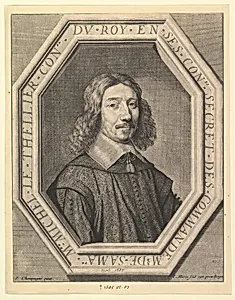
Medium
Etching, second state
Dimensions
image: 11 5/8 x 9 1/8 in. (29.5 x 23.2 cm)
Classification
Prints
Department
Drawings and Prints
Museum
Metropolitan Museum of Art, New York, NY
Credit
The Elisha Whittelsey Collection, The Elisha Whittelsey Fund, 1962
Accession Number
62.650.206
Rights
Public Domain
Tags
Art Historical Context
This etching, *Michel Le Tellier, conseiller roi*, captures the stern visage of a key figure in 17th-century French politics. Created by master engraver Jean Morin after painting by Philippe de Champaigne between 1620 and 1650, it belongs to the second state—a refined edition where details like shading and lines were enhanced for greater clarity and depth. Measuring 11 5/8 x 9 1/8 inches, this print exemplifies the Baroque era's emphasis on realistic portraiture, with Champaigne's influence evident in the subject's dignified pose and penetrating gaze. Michel Le Tellier served as a trusted counselor to Louis XIII and later Louis XIV, rising to become Secretary of State for War. His shrewd administration laid groundwork for France's military dominance, making this portrait not just an artistic likeness but a visual testament to the power brokers of the ancien régime. Etchings like this were vital for disseminating elite images to a wider audience, bridging the gap between royal courts and burgeoning print culture. Housed in the Metropolitan Museum of Art's Drawings and Prints department, thanks to The Elisha Whittelsey Collection, this work highlights etching's technical brilliance: Morin's needle etched intricate lines into a copper plate, inked and pressed to produce multiples. It invites visitors to ponder how such prints immortalized the era's influencers, blending artistry with historical narrative.
About the Artist
Jean Morin|Philippe de Champaigne · 1605–1650
Jean Morin (c. 1605–1650) was one of the most accomplished French engravers of the seventeenth century, a master of the portrait print whose work stands among the finest examples of French graphic art in its era. Little is known about his early life or training, though his technique suggests exposure to both French and Flemish engraving traditions, the latter being the dominant force in European p...