
Minerva
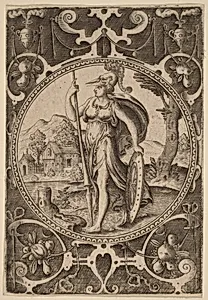
Medium
engraving on laid paper
Dimensions
sheet (trimmed to plate mark): 11 × 7.6 cm (4 5/16 × 3 in.)
Classification
Department
CG-E
Museum
National Gallery of Art, Washington, D.C.
Credit
Anonymous gift in memory of Charles B. Hoyt
Accession Number
1950.2.6
Rights
Public Domain
Art Historical Context
This exquisite engraving titled *Minerva*, created by an anonymous Netherlandish artist between 1501 and 1550, captures the Roman goddess of wisdom, strategic warfare, and the arts. Formerly attributed to Abraham de Bruyn, the work reflects the Northern Renaissance fascination with classical mythology, as artists across the Low Countries drew inspiration from ancient sources to explore themes of intellect and virtue. The small scale—measuring just 11 by 7.6 centimeters—suggests it was intended for intimate viewing, perhaps as part of a collector’s print album or a scholarly volume. Engraving on laid paper was a groundbreaking medium in the 16th century, allowing for intricate line work and widespread reproduction that helped disseminate humanist ideas throughout Europe. The technique’s precision enabled fine details in the figure’s drapery and attributes, such as her helmet or owl, symbols traditionally associated with Minerva. This print’s anonymous gift to the National Gallery of Art in memory of Charles B. Hoyt underscores its enduring appeal as a window into Renaissance cultural values. Visitors can appreciate how such works bridged classical antiquity and contemporary thought, inviting reflection on wisdom’s role in an era of discovery and reform.