
Miniature Bowl
1200–1450
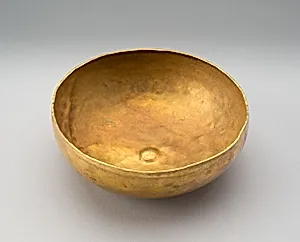
Medium
Gold
Dimensions
5.4 × 12.7 cm (2 1/8 × 5 in.)
Classification
bowl
Department
Arts of the Americas
Museum
Art Institute of Chicago
Accession Number
126468
Rights
Public Domain
Art Historical Context
This exquisite **Miniature Bowl**, crafted by Inca artisans between 1200 and 1450, exemplifies the unparalleled mastery of pre-Columbian goldsmithing in the Andes. Made from pure gold, this diminutive vessel measures just 5.4 × 12.7 cm, yet its delicate form speaks volumes about the Inca's reverence for precious metals. Housed in the Art Institute of Chicago's Arts the Americas department, it visitors to marvel at a culture that viewed gold not merely as wealth, but as "sweat of the sun"—a divine embodiment of Inti, their sun god. The Inca, whose empire would later span much of South America, perfected techniques like lost-wax casting and repoussé hammering to create such intricate objects. This bowl's smooth, hammered surface and precise proportions suggest it was likely used in elite rituals or as an offering, highlighting the society's hierarchical structure and spiritual worldview. Miniature scale amplified its preciousness, reserved for nobility or temples. Though small, this artifact bridges the late Intermediate Period to the Inca's rise, offering a window into a world of cosmic symbolism and technical brilliance. Pause here to appreciate how gold's eternal shine captured the Inca's quest for harmony between earth and heavens.
About the Artist
Inca
Inca artists, operating anonymously within the vast Inca Empire from approximately 1425 to 1532 CE, were masterful creators whose works symbolized imperial power and unity across the Andes. Thriving in the heart of Cuzco, the empire's capital, these skilled artisans—men and women alike—produced textiles, ceramics, and metalwork that served both practical and ceremonial purposes. Gifted craftspeopl...