
Miniature Bowl
1200–1450
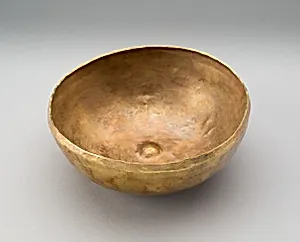
Medium
Gold
Dimensions
5.4 × 12.7 cm (2 1/8 × 5 in.)
Classification
bowl
Department
Arts of the Americas
Museum
Art Institute of Chicago
Accession Number
126469
Rights
Public Domain
Art Historical Context
This delicate **Miniature Bowl**, crafted by Inca artisans between 1200 and 1450, exemplifies the mastery of pre-Columbian goldsmithing in the Andes. Measuring just 5.4 × 12.7 cm (2 1/8 × 5 in.), its petite scale belies its grandeur, fashioned entirely from shimmering gold—a metal revered by the Inca as the "sweat of the sun symbolizing divine power and imperial prestige. Housed in the Art Institute of Chicago's Arts the Americas department, this likely served ceremonial purposes, perhaps for offerings or elite rituals during the formative years of Inca expansion. Inca metalwork, part of the broader Andean tradition, showcased advanced techniques like hammering, repoussé (raising designs from the reverse), and soldering, transforming raw gold into objects of spiritual and social significance. Gold was not hoarded for wealth but offered to deities, reflecting the Inca's animistic worldview where metals embodied cosmic forces. This bowl's survival highlights the sophistication of Inca craftsmanship before the empire's zenith around 1438–1533. Visitors, imagine holding this radiant artifact: a window into a world where art and ritual intertwined, bridging the earthly and divine in the high Andes.
About the Artist
Inca
Inca artists, operating anonymously within the vast Inca Empire from approximately 1425 to 1532 CE, were masterful creators whose works symbolized imperial power and unity across the Andes. Thriving in the heart of Cuzco, the empire's capital, these skilled artisans—men and women alike—produced textiles, ceramics, and metalwork that served both practical and ceremonial purposes. Gifted craftspeopl...