
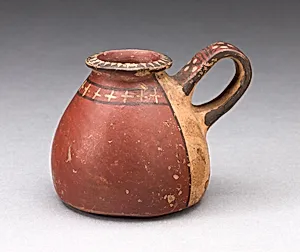
Miniature Handled Jug
1450–1532
Medium
Ceramic and pigment
Dimensions
7.1 × 7 cm (2 13/16 × 3 3/4 in.)
Classification
earthenware
Department
Arts of the Americas
Museum
Art Institute of Chicago
Accession Number
91494
Rights
Public Domain
Art Historical Context
This exquisite **Miniature Handled Jug crafted by Inca artisans between 1450 and 1532, offers a window into the height of the Inca Empire in the Andes. Measuring just 7.1 × 7 cm, its petite scale belies the sophistication of Inca ceramic production, which flourished across modern-day Peru and beyond. Produced during a time when the Inca controlled a vast territory through advanced engineering and artistry, such vessels were likely used in rituals, as offerings, or even as models for larger pottery forms. Made of earthenware with applied pigment, the jug showcases Inca mastery of firing techniques and surface decoration. Earthenware, fired at lower temperatures, allowed for intricate shapes like this handled form, often enhanced with slips or paints for vibrant patterns—though specifics here highlight the pigment's role in adding color and detail. The single handle suggests functionality for pouring liquids, perhaps chicha (corn beer) in ceremonial contexts, underscoring the Inca's blend of utility and symbolism. Housed in the Art Institute of Chicago's Arts of the Americas department, this piece exemplifies pre-Columbian ingenuity. Its survival speaks to the enduring legacy of Inca craftsmanship, inviting us to appreciate a culture that valued harmony between form, function, and the spiritual world. (198 words)
About the Artist
Inca
Inca artists, operating anonymously within the vast Inca Empire from approximately 1425 to 1532 CE, were masterful creators whose works symbolized imperial power and unity across the Andes. Thriving in the heart of Cuzco, the empire's capital, these skilled artisans—men and women alike—produced textiles, ceramics, and metalwork that served both practical and ceremonial purposes. Gifted craftspeopl...