
Miniature Stirrup-Spout Vessel
1100–1470
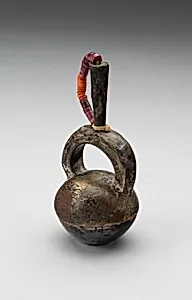
Medium
Ceramic and pigment
Dimensions
H. 10.2 (4 in.)
Classification
metal
Department
Arts of the Americas
Museum
Art Institute of Chicago
Accession Number
61400
Rights
Public Domain
Art Historical Context
Nestled in the Art Institute of Chicago's Arts of the Americas collection, this **Miniature Stirrup-Sp Vessel** exemplifies the masterful ceramics of the Chimú culture which thrived on Peru's northern coast from around 1100 to 1470 CE. Crafted from ceramic with pigment accents and standing just 4 inches (10.2 cm) tall, its delicate stirrup-spout form—two arched spouts joined by a strap handle—allowed for controlled pouring of liquids like chicha (corn beer) without spills, a practical innovation rooted in earlier Andean traditions. The Chimú were renowned for their sophisticated artistry, blending functionality with symbolism in everyday and ritual objects. This miniature scale suggests it may have served as a votive offering, model, or elite decorative piece, showcasing their skill in molding fine clays and applying vibrant pigments for intricate patterns. Though classified among metalworks, its ceramic medium highlights the Chimú's versatility, often mimicking metallic sheen through burnishing techniques. A testament to pre-Columbian ingenuity before the Inca conquest around 1470 CE, this vessel invites us to ponder the Chimú's vibrant world of trade, agriculture, and spirituality—perfect for imagining ancient hands cradling its curves.
About the Artist
Chimú
The Chimú, a preeminent pre-Columbian culture of Peru's northern coast, flourished from approximately 900 to 1470 CE as the Kingdom of Chimor, emerging in the wake of the Moche civilization's decline and incorporating influences from the Sican, Wari, and Cajamarca cultures. Centered in the vast adobe metropolis of Chan Chan—the largest city in the Americas before the Inca, housing up to 60,000 peo...