
Minimic
Medium
Painting
Classification
Painting
Department
Smithsonian Collection
Museum
Smithsonian American Art Museum
Credit
National Portrait Gallery, Smithsonian Institution; gallery purchase, in memory of Brigadier General Richard Henry Pratt and his Wife, Anna Laura Mason Pratt, Friends of Minimic
Accession Number
NPG.96.163
Rights
Public Domain
Tags
About this artwork
Birthplace unknown
Art Historical Context
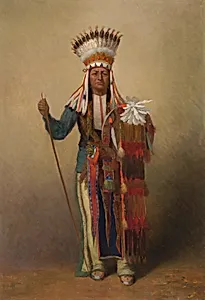
**Minimic** (c. 1878) is a compelling portrait by James Wells Champney (1843–1903), an American artist renowned for his detailed illustrations and evocative genre paintings. Capturing the dignified likeness of Minimic, a Native American warrior and chief whose birthplace remains unknown, this oil painting highlights traditional regalia including a feathered headdress and shield. Champney's work reflects the late 19th-century fascination with Indigenous cultures amid westward expansion, blending portraiture with ethnographic interest. The painting holds historical significance through its acquisition by the Smithsonian's National Portrait Gallery, purchased in memory of Brigadier General Richard Henry Pratt and his wife, Anna Laura Mason Pratt—personal friends of Minimic. Pratt, founder of the Carlisle Indian Industrial School, bridged military and educational efforts with Native communities, adding layers of personal and cultural connection to the artwork. Displayed in the Smithsonian American Art Museum, it serves as a window into the complex relationships between settlers and Indigenous leaders during a transformative era. Champney's technique emphasizes realistic rendering of textures—from the intricate feathers to the shield's symbolism—evoking the subject's strength and heritage. This portrait not only celebrates Minimic's identity but also invites reflection on Native American resilience and representation in American art. (198 words)