
Mirror Case
Qing dynasty (1644–1911), 1875/1900
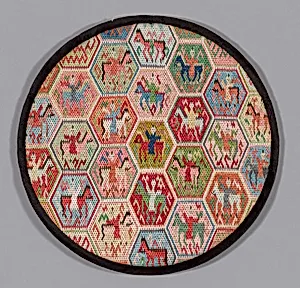
Medium
Embroidered with figures on horseback, embroidery on gauze.
Dimensions
17.3 × 19.6 cm (7 5/8 × 7 3/4 in.)
Classification
textile
Department
Textiles
Museum
Art Institute of Chicago
Accession Number
22084
Rights
Public Domain
Art Historical Context
This exquisite **Mirror Case** from China's Qing dynasty (1644–1911), dating to around 1875–1900, showcases the era's masterful textile artistry. Crafted as a small, portable accessory—measuring just 17.3 × 19.6 cm—it was designed to hold a personal mirror, a common item for women in elite households. The surface is embroidered with dynamic figures on horseback, rendered in fine silk threads on delicate gauze, creating a lightweight, semi-translucent effect that allows light to play through the fabric. Embroidery on gauze was a sophisticated technique prized in late imperial China, demanding exceptional skill to manipulate sheer material without distortion. The horseback motif likely evokes themes of mobility, adventure, or martial prowess, motifs resonant in Qing visual culture amid a dynasty facing internal reforms and external pressures. Such objects blended utility with opulence, symbolizing the owner's refinement and status. Housed in the Art Institute of Chicago's Textiles Department, this anonymous masterpiece highlights the Qing era's enduring legacy in decorative arts, where everyday items became canvases for storytelling and technical virtuosity. Visitors will appreciate its intimate scale and the lively energy captured in every stitch.
About the Artist
Unknown
The artist designated as "Unknown" in our virtual museum's collection exemplifies a poignant chapter in art history: creators whose identities have faded into obscurity despite the enduring power of their work. With only one known artwork attributed to them in our holdings, this figure represents countless anonymous hands that shaped visual culture across centuries. Museums worldwide, including th...