
Miser's purse
early 19th century
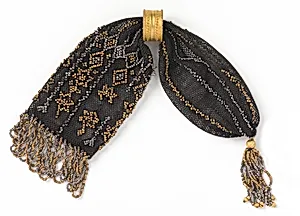
Medium
costume & accessories
Classification
costume & accessories
Department
Smithsonian Collection
Museum
Smithsonian American Art Museum
Credit
Gift of Mrs. Albert Blum
Accession Number
1953-106-41
Rights
Public Domain
About this artwork
Research in Progress
Art Historical Context
Step into the elegant world of early 19th-century fashion with this charming *Miser's Purse*, a delightful example of period costume and accessories from the Smithsonian American Museum. Dating to the early 1800s, this accessory exemplifies the practical yet decorative handcrafts popular among women during the Regency era. Generously donated by Mrs. Albert Blum it now resides in the Smithsonian Collection, highlighting everyday treasures of American life. Miser's purses, named for their clever design to thwart light-fingered "miserly" owners, featured two tubular compartments—one for bills, the other for coins—accessed via sliding rings or steel frames. Crafted through intricate techniques like knitting, crocheting, or beading with silk threads and tiny beads, these purses blended functionality with artistry. They were often homemade gifts or personal indulgences, reflecting the domestic skills and resourcefulness of their makers in a time before mass-produced wallets. Though research on this specific piece is ongoing, it offers a window into the social customs of the era, where such accessories were essential for women navigating markets, social calls, or travel. A testament to understated ingenuity, it reminds us how ordinary objects can encapsulate history's quiet elegance.
About the Artist
Unknown
The artist designated as "Unknown" in our virtual museum's collection exemplifies a poignant chapter in art history: creators whose identities have faded into obscurity despite the enduring power of their work. With only one known artwork attributed to them in our holdings, this figure represents countless anonymous hands that shaped visual culture across centuries. Museums worldwide, including th...