
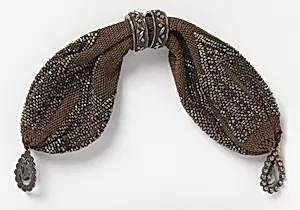
Miser's purse
early 19th century
Classification
costume & accessories
Department
Smithsonian Collection
Museum
Smithsonian American Art Museum
Credit
Gift of Mrs. Albert Blum
Accession Number
1953-106-48
Rights
Public Domain
About this artwork
Research in Progress
Art Historical Context
Step into the elegant world of early 19th-century accessories with this charming *Miser's Purse* from the Smithsonian American Art Museum's. Dating to the early 1800s and generously gifted by Mrs. Albert Blum, this piece falls under the Costume & Accessories classification in the Smithsonian Collection. Though the artist and medium remain unidentified— with research ongoing—it exemplifies the practical yet refined personal items carried by Americans during the Federal period, a time of growing national identity and neoclassical influences. Miser's purses, also known as string purses, were ingenious designs featuring a sliding steel ring that opened dual compartments: one for coins and another for smaller essentials like needles or keys. This clever mechanism prevented spills and reflected the era's emphasis on thrift and organization, earning the "miser" nickname for its secure hold on money. Worn by women of various social classes, these purses bridged fashion and functionality, often handmade as gifts or personal projects. As a snapshot of everyday life, this purse highlights the artistry in overlooked objects, reminding us how accessories shaped social rituals. Ongoing research promises to reveal more about its craftsmanship and story—stay tuned for updates! (178 words)
About the Artist
Unknown
The artist designated as "Unknown" in our virtual museum's collection exemplifies a poignant chapter in art history: creators whose identities have faded into obscurity despite the enduring power of their work. With only one known artwork attributed to them in our holdings, this figure represents countless anonymous hands that shaped visual culture across centuries. Museums worldwide, including th...