
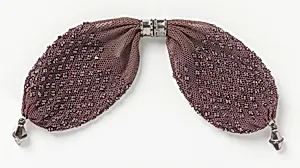
Miser's purse
early 19th century
Medium
costume & accessories
Classification
costume & accessories
Department
Smithsonian Collection
Museum
Smithsonian American Art Museum
Credit
Gift of Mrs. Albert Blum
Accession Number
1953-106-50
Rights
Public Domain
About this artwork
Research in Progress
Art Historical Context
Step into the early 19th century with charming *Miser's Purse*, a delightful example of period costume accessory from the Smithsonian American Art's collection. Dating to the Regency era, these purses were ingenious inventions designed for practicality: featuring two compartments accessed via sliding rings, they allowed users—often women—to separate coins or small valuables, earning their "miser" nickname for the secure, stingy way they guarded money. Crafted as a gift from Mrs. Albert Blum, this piece reflects everyday elegance in American life. Typically handmade through knitting, crocheting, or beading with steel or silk threads, miser's purses blended functionality with subtle artistry. Their compact, pouch-like form made them ideal for reticules or pockets, embodying the era's shift toward personalized accessories amid growing consumer culture. Though the artist's identity remains unknown and research is ongoing, such items highlight women's domestic creativity and the decorative arts' role in daily fashion. This artifact invites us to ponder the intimate stories behind ordinary objects—how a simple purse carried not just coins, but the aspirations and economies of its time. A true hidden gem in the Smithsonian's holdings! (178 words)
About the Artist
Unknown
The artist designated as "Unknown" in our virtual museum's collection exemplifies a poignant chapter in art history: creators whose identities have faded into obscurity despite the enduring power of their work. With only one known artwork attributed to them in our holdings, this figure represents countless anonymous hands that shaped visual culture across centuries. Museums worldwide, including th...