
Mississippi Fisherman
c. 1850
Medium
Oil on canvas
Dimensions
74.9 × 62.5 cm (29 1/2 × 24 5/8 in.)
Classification
american arts
Department
Arts of the Americas
Museum
Art Institute of Chicago
Accession Number
260764
Rights
Public Domain
About this artwork
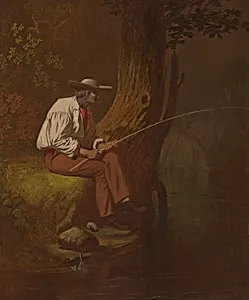
George Caleb Bingham portrayed a man quietly fishing in a secluded spot, delineating the figure and environs with controlled brushwork. Raised in Missouri, Bingham specialized in genre paintings of white working-class boatmen who facilitated the brisk movement of commercial goods along the Mississippi, Missouri, and Ohio Rivers in the mid-19th century. Here, the figure’s loose-fitting shirt, boots, and hat convey his role as a laborer in the area’s river economy. Achieving a national reputation...
Art Historical Context
George Caleb Bingham's "Mississippi Fisherman," painted around 1850, captures a quiet moment along the great American waterway during a period of rapid westward expansion. As a leading genre painter of the antebellum era, Bingham specialized in scenes of frontier life, portraying ordinary individuals—boatmen, traders, and fishermen—who embodied the self-reliant spirit of the young nation. This oil on canvas reflects the era's fascination with the Mississippi and Missouri rivers as vital arteries of commerce and migration, offering viewers a glimpse into the rhythms of mid-19th-century American existence. Bingham's technique blends precise observation with luminous effects, using soft natural light to model the fisherman's figure against the expansive river landscape. The modest scale of the work invites intimate viewing, emphasizing the harmony between person and environment rather than dramatic action. Such paintings helped shape a distinctly American visual identity, celebrating everyday labor while subtly evoking themes of freedom and possibility on the frontier. Today, this piece in the Art Institute of Chicago's collection reminds us how art documented the nation's transformation, preserving the dignity of its working people for future generations.