
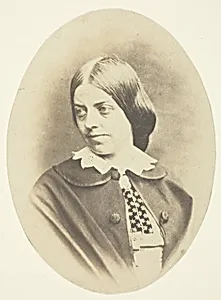
Mrs. Craik
1850/59
Medium
Calotype
Dimensions
Image/paper, oval: 11.8 × 8.7 cm (4 11/16 × 3 7/16 in.)
Classification
salted paper print
Department
Photography and Media
Museum
Art Institute of Chicago
Accession Number
34904
Rights
Public Domain
Art Historical Context
**Mrs. Craik** is a delicate portrait captured in the 1850s using the calotype process, an early photographic technique invented by William Henry Fox Talbot the late 1830s. This salted paper print, measuring just 11.8 × 8.7 cm in an oval format, presents an intimate view of its sitter, evoking the refined miniature portraits of the era. Produced during photography's formative years, it reflects the rapid adoption of the medium in Britain and beyond, where calotypes offered a groundbreaking alternative to the one-of-a-kind daguerreotype. The calotype's charm lies in its paper negative, which allowed for multiple prints from a single exposure—unlike its rivals—resulting in the soft, textured tones and subtle grain characteristic of salted paper prints. These works often mimic the painterly effects of drawings or watercolors, bridging art and science. Dated between 1850 and 1859, this image captures mid-Victorian sensibilities, with the oval shape nodding to traditional cameo jewelry and lockets, making it a cherished personal keepsake. Housed in the Art Institute of Chicago's Photography and Media department, **Mrs. Craik** exemplifies how early photographers democratized portraiture, preserving everyday lives with unprecedented realism. Though the artist remains unknown, the print's survival highlights the medium's enduring cultural role in documenting identity and memory.
About the Artist
Unknown
The artist designated as "Unknown" in our virtual museum's collection exemplifies a poignant chapter in art history: creators whose identities have faded into obscurity despite the enduring power of their work. With only one known artwork attributed to them in our holdings, this figure represents countless anonymous hands that shaped visual culture across centuries. Museums worldwide, including th...