
Nagaraja (Serpent King)
Unknown Artist
ca. second quarter of the 5th century
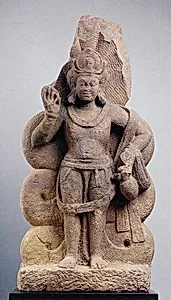
Medium
Stone
Dimensions
H. 38 7/8 in. (98.7 cm)
Classification
Sculpture
Culture & Period
India (Madhya Pradesh) · Gupta period
Department
Asian Art
Museum
Metropolitan Museum of Art, New York, NY
Credit
Gift of Evelyn Kossak, The Kronos Collections, 1987
Accession Number
1987.415.1
Rights
Public Domain
Tags
Art Historical Context
Step into the enchanting world of Gupta-era India with *Nagaraja (Serpent King)*, a masterful stone sculpture from Madhya Pradesh, dating to around the second quarter of the5th century. Standing nearly 39 inches (98.7 cm) tall, this imposing figure depicts a mythical serpent king, a divine protector revered in Hindu mythology. Nagarajas, often portrayed as hooded cobra lords, symbolized guardianship over treasures, waters, and sacred realms, blending human regal authority with serpentine power. Crafted during the Gupta period—India's "Golden Age" of art and empire—this sculpture exemplifies the era's artistic pinnacle. Gupta sculptors achieved unparalleled refinement in stone carving, evident in the smooth, volumetric forms, idealized anatomy, and serene yet commanding presence. The use of local sandstone or related stone allowed for intricate detailing, from the multi-hooded crown to flowing drapery, capturing a harmonious fusion of naturalism and divine abstraction. Housed in the Metropolitan Museum of Art's Asian Art Department (gift of Evelyn Kossak, The Kronos Collections, 1987), this piece illuminates Hinduism's rich pantheon and the Gupta dynasty's cultural flourishing, where royal patronage elevated temple art to new heights. A testament to ancient devotion, it invites visitors to ponder the timeless dance between myth and mastery.