
Medium
Album leaf; ink and color on silk
Dimensions
8 3/4 x 9 1/2 in. (22.2 x 24.1 cm)
Classification
Paintings
Culture & Period
China · Ming dynasty (?) (1368–1644)
Department
Asian Art
Museum
Metropolitan Museum of Art, New York, NY
Credit
From the Collection of A. W. Bahr, Purchase, Fletcher Fund, 1947
Accession Number
47.18.143
Rights
Public Domain
Tags
Art Historical Context
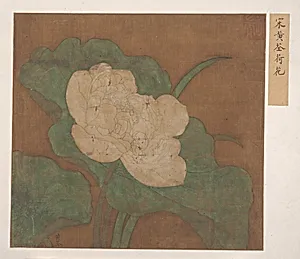
Behold the delicate beauty of *Lotus*, an exquisite album leaf painting attributed to the unidentified artist Huang Quan, though dated to the Ming dynasty (1368–1644) possibly earlier. Rendered in ink and color on silk, this intimate 8¾ × 9½-inch (22.2 × 24.1 cm) work exemplifies the refined tradition of Chinese flower painting. Album leaves like this were prized personal treasures, easily stored in albums for contemplation and sharing among scholars and collectors. The luminous lotus blooms captured here symbolize purity and enlightenment in Chinese and Buddhist culture, rising pristine from murky waters—a metaphor for spiritual transcendence. Huang Quan, a master of the Tang-Five Dynasties era renowned for his meticulous "fine-line" (gongbi) style in bird-and-flower subjects, likely inspired this piece. The artist's precise ink outlines and subtle color washes on silk create a sense of ethereal depth, highlighting the flower's velvety petals and dewdrops with lifelike vitality. Acquired from A. W. Bahr's renowned collection via the Fletcher Fund in 1947, this painting now graces the Metropolitan Museum of Art's Asian Art department. It invites visitors to pause and appreciate the timeless harmony of nature and artistry in imperial China.