
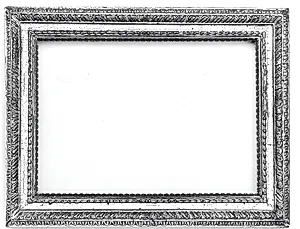
Neoclassical frame
Unknown Artist
1760–70
Medium
Poplar
Dimensions
Overall: 12 3/8 × 16 in. (31.5 × 40.7 cm) Sight: 8 7/16 × 12 3/16 in. (21.5 × 31 cm) Rabbet: 9 1/8 × 12 13/16 in. (23.2 × 32.5 cm)
Classification
Frames
Culture
Italian, Rome (?)
Department
Robert Lehman Collection
Museum
Metropolitan Museum of Art, New York, NY
Credit
Robert Lehman Collection, 1975
Accession Number
1975.1.2290
Rights
Public Domain
Art Historical Context
This exquisite Neoclassical frame, around 1760–70 in possibly Rome, Italy, exemplifies the era's fascination with ancient Greek and Roman antiquity. from poplar—a lightweight, carvable hardwood popular for its fine grain and affordability—this frame reflects the mid-18th-century shift toward neoclassicism, a movement emphasizing symmetry, clean lines, and restrained ornamentation over the exuberant curves of Baroque and Rococo styles. Likely designed to encase a portrait or small painting, its precise dimensions (overall 12 3/8 × 16 in.) highlight the meticulous craftsmanship of Roman workshops, where framemakers drew inspiration from archaeological discoveries at sites like Pompeii. Neoclassical frames like this one were more than mere supports; they were integral to an artwork's presentation, enhancing its classical dignity and harmonizing with the piece inside. The "sight" opening (8 7/16 × 12 3/16 in.) and rabbet dimensions suggest it was custom-fitted, underscoring the bespoke nature of 18th-century framing. Now part of the Robert Lehman Collection at The Metropolitan Museum of Art since 1975, this anonymous masterpiece offers a window into how collectors and artists elevated everyday wood into architectural elegance, bridging sculpture and painting in the grand tradition of Italian design. (Word count: 198)