
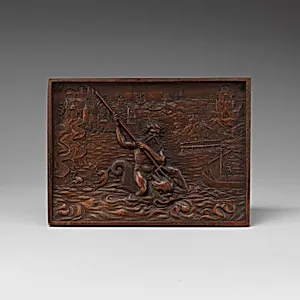
Neptune Riding a Dolphin
ca. 1530–50
Medium
Boxwood
Dimensions
5 1/4 × 4 in. (13.3 × 10.2 cm)
Classification
Sculpture
Culture
Germany, Nuremberg
Department
European Sculpture and Decorative Arts
Museum
Metropolitan Museum of Art, New York, NY
Credit
Purchase, Wrightsman Fellows Gifts, 2019
Accession Number
2020.47
Rights
Public Domain
Tags
Art Historical Context
Behold the spirited *Neptune Riding a Dolphin a masterful boxwood sculpture by Peter Flötner, around 1530–50 in Nuremberg, Germany. Standing just over 5 inches tall, diminutive yet dynamic work captures the sea god Neptune in mid-leap astride a twisting dolphin, evoking the thrill of classical mythology revived during the Renaissance. Flöt, a pioneering Nuremberg artist known for his intricate designs in sculpture, medals, and prints, drew inspiration from Italian Renaissance motifs, blending them with the precise, Northern German craftsmanship that made his city a hub of artistic innovation. Carved from boxwood—a dense, fine-grained wood ideal for tiny, elaborate details—this piece showcases Flötner's virtuosity in capturing movement and texture. The god's muscular form, flowing beard, and the dolphin's sinuous scales demonstrate the era's fascination with antiquity, symbolizing Neptune's dominion over the seas amid the humanist revival of pagan gods. Nuremberg's workshops, famed for small-scale luxury objects like this, catered to wealthy collectors who prized such intimate treasures for curiosity cabinets. Acquired by The Metropolitan Museum of Art in 2019, this sculpture invites us to marvel at how Renaissance artists like Flötner bridged classical lore and meticulous technique, turning myth into tangible wonder. A perfect emblem of 16th-century ingenuity!
About the Artist
Peter Flötner · 1485–1546
Peter Flötner (c. 1485–1546) was a German sculptor, ornament designer, and medalist whose work played a central role in the transmission of Italian Renaissance decorative vocabulary into the German-speaking lands. Though his exact origins remain uncertain — he may have trained in Augsburg before settling permanently in Nuremberg around 1522 — his formation evidently included exposure to Italian Re...