
Neptune
Classification
Department
Smithsonian Collection
Museum
Smithsonian American Art Museum
Credit
Purchased for the Museum by the Advisory Council
Accession Number
1921-6-420-8
Rights
Public Domain
About this artwork
Research in Progress
Art Historical Context
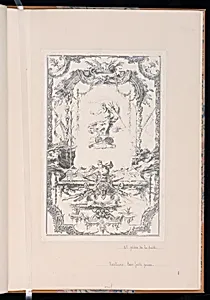
Claude Gillot (1673–1722), a pioneering French artist and engraver, created works that bridged the late Baroque and emerging Rococo styles, influencing masters like Antoine Watteau. *Neptune*, dated 1729–37—after Gillot's death—likely a posthumous print derived from his designs or studio output, a common practice for disseminating popular motifs during the era. As a mythological depiction of the sea god Neptune, it embodies the period's fascination with classical antiquity, evoking power, fluidity, and grandeur through Gillot's dynamic compositions. Classified as a print in the Smithsonian American Art Museum's collection, this piece highlights the medium's role in 18th-century art dissemination. Prints allowed intricate designs to reach wider audiences affordably, preserving an artist's legacy beyond paintings. Gillot's technique, often involving etching or engraving, emphasized expressive lines and theatrical poses, capturing Neptune's dominion over waves in a style that foreshadowed Rococo exuberance. Purchased for the museum by the Advisory Council, *Neptune* reflects ongoing research into Gillot's oeuvre. Though details like the exact medium remain under study, it offers visitors a window into French artistic innovation and its transatlantic echoes in American collections. (198 words)